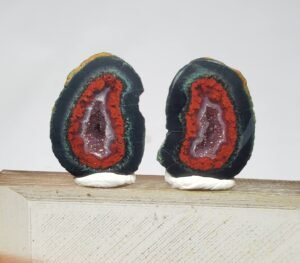
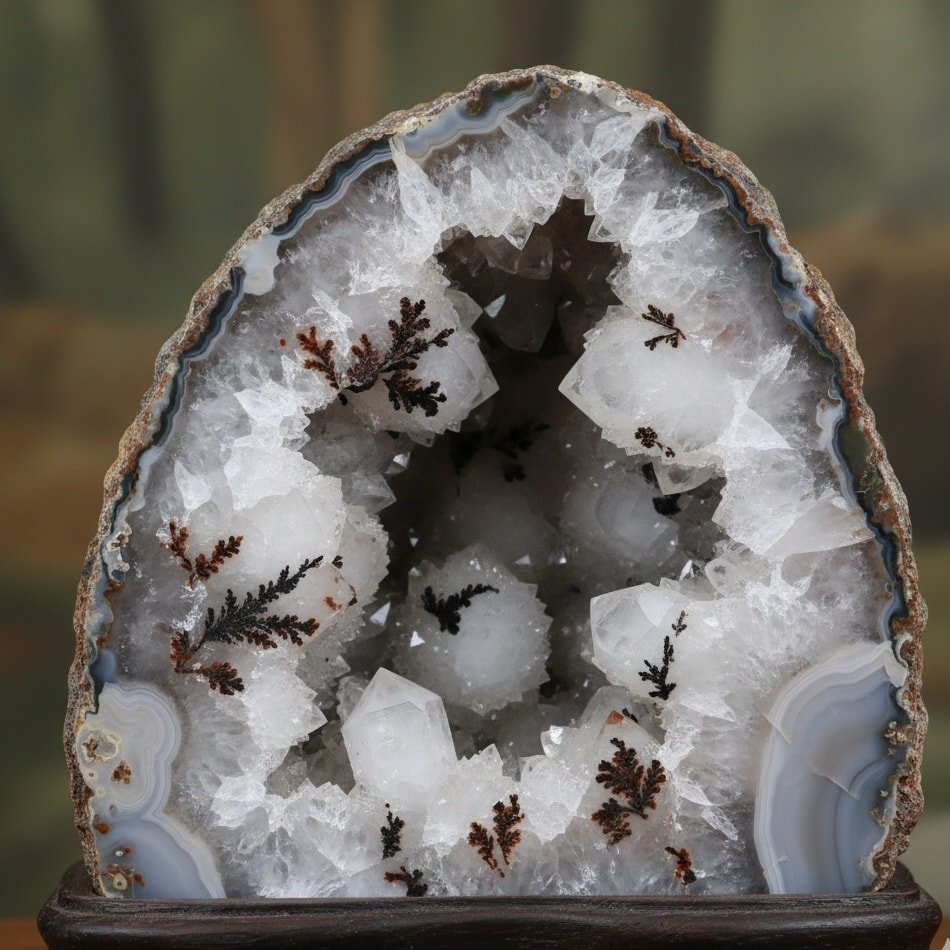
From the sun-baked deserts to the pixelated worlds of video games, geodes captivate our imagination with their promise of hidden beauty. A geode is a spherical rock formation that appears plain and unremarkable on the outside but contains a breathtaking cavity lined with crystals, minerals, or colorful banded agate. These natural wonder capsules form over millions of years when mineral-rich groundwater slowly seeps into a cavity within a rock—often a gas bubble in volcanic rock or a hollow in sedimentary formations. As the water evaporates or undergoes chemical changes, it leaves behind microscopic mineral crystals that grow inward, layer by layer, creating the stunning crystalline interiors we prize. This process makes each geode a unique time capsule of geological history, a literal snapshot of the ancient conditions that formed it.
What Are Geodes?
To truly appreciate a geode, it helps to understand its anatomy and formation. The process begins with the creation of a cavity. In volcanic regions, this is often a gas bubble trapped within cooling lava. In sedimentary areas like limestone, a cavity can form from the decay of organic material or the dissolution of minerals by acidic water. Once the hollow exists, groundwater saturated with dissolved silica (for quartz crystals) or other minerals like calcite or celestite percolates into the space. Over immense stretches of geological time, changes in temperature, pressure, or acidity cause these minerals to come out of solution and crystallize onto the cavity walls. The most common and sought-after geode interiors are lined with sparkling, transparent quartz crystals. However, the specific minerals present depend entirely on the local geology; this gives rise to the incredible variety found around the world, from the purple amethyst geodes of Brazil to the sky-blue celestite geodes of Madagascar.
How to Find Geodes?
For rockhounds and amateur geologists, the thrill of the hunt is a major part of the geode appeal. Success relies on knowing where to look and what to look for. First, research is paramount. Focus your search in regions with known geode deposits, which are often in arid environments or former volcanic areas. Once in a promising location, look for spherical or egg-shaped rocks that feel lighter than they look for their size—a sign of a hollow interior. The outer rind is typically limestone or a rough, bumpy volcanic rock. A distinctive feature is a knobby, cauliflower-like texture on the exterior. Use geological maps to identify ancient riverbeds, creek banks, or eroded hillsides where weathering may have exposed these treasures. Always remember to check local regulations; collecting is prohibited in national parks and on private land without permission. The ultimate test, of course, is the sound: a loose, rattling sound when shaken gently suggests crystals have formed inside, while a solid thunk indicates a filled nodule.
Where to Find Geodes?
The United States boasts several world-renowned geode hunting locations. The midwestern states, particularly Iowa, Illinois, Missouri, and Kentucky, are famous for their “Keokuk geodes,” often filled with clear quartz, calcite, or banded agate. In the west, the Dugway Geode Beds in Utah and the Hauser Geode Beds in the Southern California desert are legendary public collecting sites, yielding geodes with stunning translucent quartz interiors. Internationally, Brazil is the king of spectacular geodes, producing giant, cathedral-like amethyst geodes from volcanic deposits in the state of Rio Grande do Sul. Mexico’s “coconut” geodes, lined with druzy quartz, are another prized find. For those in Europe, geodes can be found in regions with volcanic history, such as the Eifel region in Germany. Starting your hunt at a registered fee-to-dig site or on guided field trips with local rock clubs is the safest and most productive way for beginners to find geodes.
What is Geodes in Minecraft?
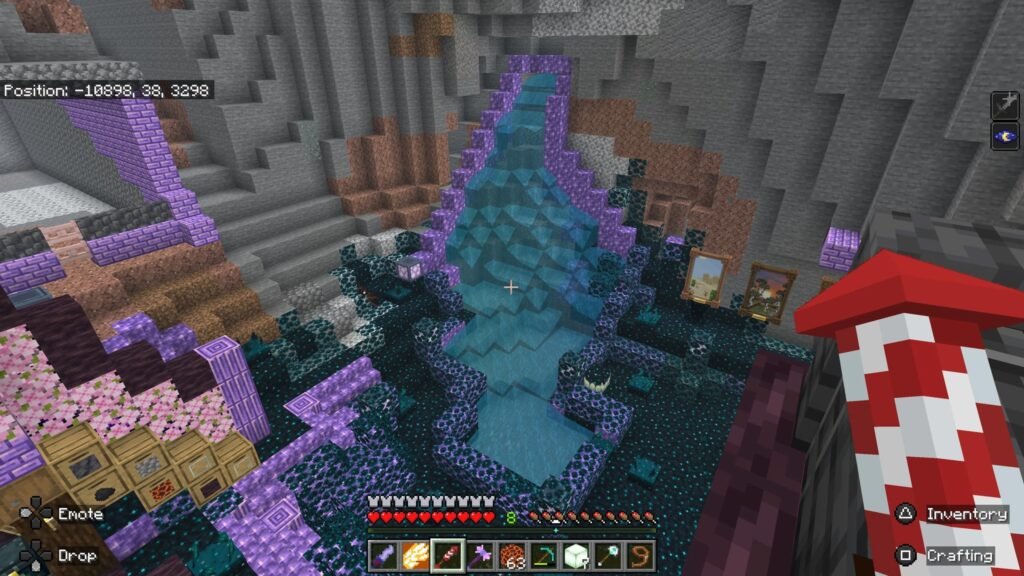
The fascination with geodes has powerfully translated into the digital world, most notably in the blockbuster game Minecraft. In Minecraft, amethyst geodes are stunning underground structures introduced in the Caves & Cliffs update. These massive, spherical Minecraft geodes have a rough outer layer of basalt and calcite, hiding an interior bristling with blocks of glowing amethyst crystals and budding amethyst that players can harvest. They serve as a crucial resource for crafting telescopes and decorative blocks, mirroring the real-world excitement of discovering a hidden cache of crystals.
Similarly, in the beloved farming simulator Stardew Valley, geodes are a core mechanic. Players can collect Stardew Valley geodes—classified as standard, frozen, magma, and omni—while mining and take them to the Blacksmith in town to be cracked open. Each type contains a randomized assortment of minerals, artifacts, and resources, driving collection goals and completion of the Museum. The act of opening these Stardew Valley geodes perfectly captures the anticipation and surprise of cracking open a real geode, democratizing the geological thrill for millions of players.
What is Amethyst Geodes?
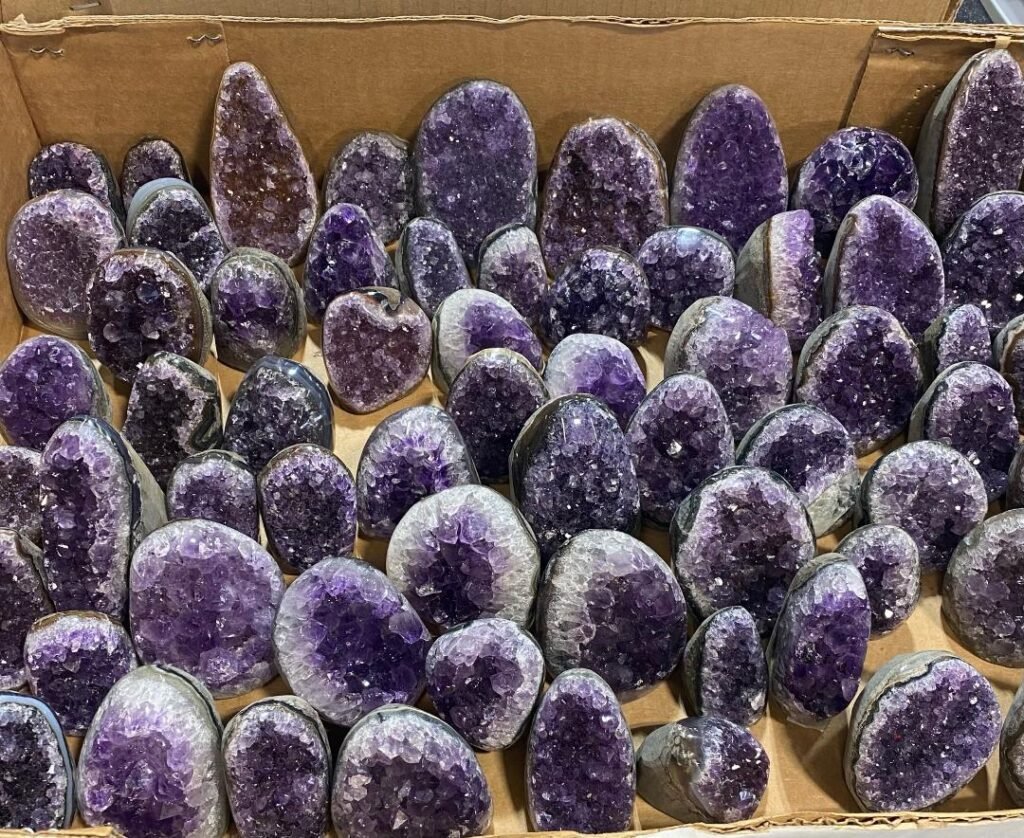
Among all varieties, amethyst geodes hold a special place as the royalty of the geode world. Amethyst, the purple variety of quartz, gets its majestic color from trace amounts of iron and natural irradiation within the earth. The most spectacular specimens come from volcanic regions in Brazil and Uruguay, where massive geodes—some large enough to walk into—are lined with deep purple crystals. Beyond their breathtaking beauty, amethyst has been attributed with metaphysical properties of calm and clarity for centuries, adding to its allure. Whether displayed as a stunning natural sculpture or broken into smaller clusters, an amethyst geode brings a touch of geological majesty into any home, connecting us to the powerful, slow-moving forces that shape our planet.
In conclusion, geodes are a perfect symbol of nature’s hidden wonders. They teach us that true beauty often lies beneath a plain surface, waiting to be discovered. This lesson resonates from the ancient riverbeds where they form to the virtual landscapes of our favorite games. Whether you’re a geologist with a rock hammer, a gamer with a pixelated pickaxe, or simply someone who appreciates natural art, the timeless appeal of the geode—a rough exterior protecting a sparkling, crystalline heart—is universally captivating.