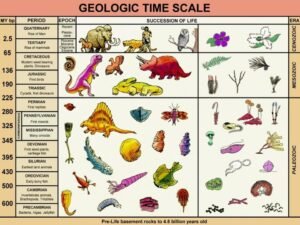
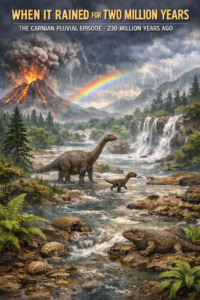
Earth’s history is filled with dramatic climate changes, but one of the most fascinating events occurred about 230 million years ago, when the planet experienced an extraordinary period of intense rainfall that lasted nearly two million years. This remarkable event is known as the Carnian Pluvial Episode, and it took place during the Triassic Period. Scientists believe this unusual wet phase transformed the planet’s climate, reshaped ecosystems, and even helped pave the way for the rise of dinosaurs.
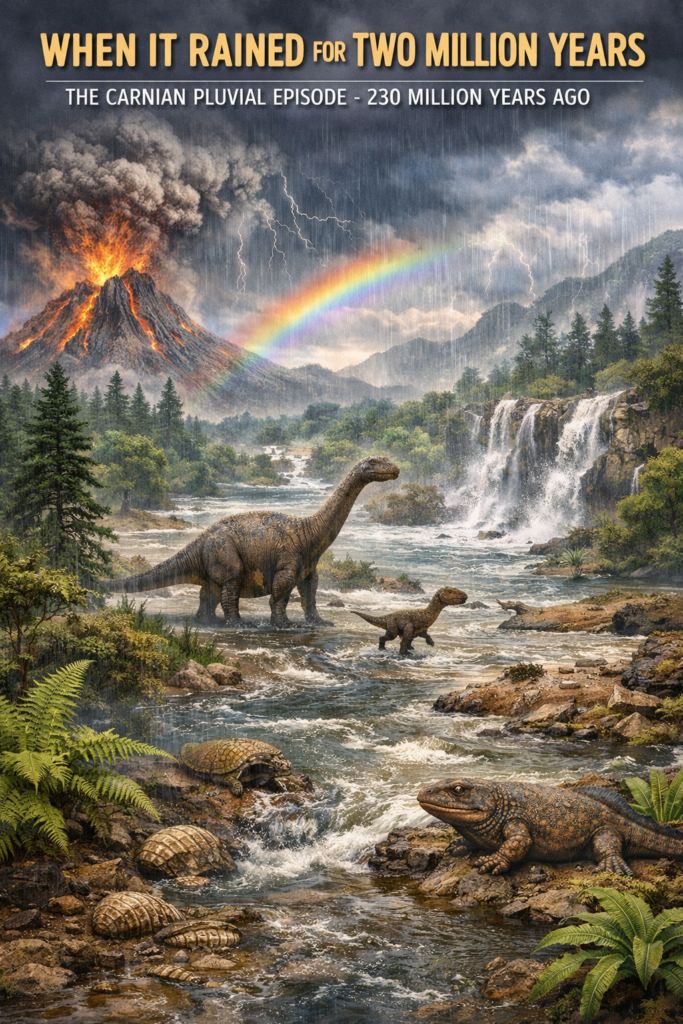
Earth During the Triassic Period
During the Triassic Period, most of Earth’s landmasses were joined together in a giant supercontinent called Pangaea. Because of this massive landmass, much of the interior experienced hot and dry conditions, similar to modern deserts. Rainfall was limited and many regions were arid.
Life on Earth was still recovering from the devastating Permian–Triassic Extinction Event, which wiped out nearly 90% of marine species and a large number of land organisms. Early reptiles, primitive dinosaurs, and plant species were slowly diversifying in this challenging environment.
However, the global climate suddenly changed during the Carnian stage of the Triassic.
What Happened During the Carnian Pluvial Episode?
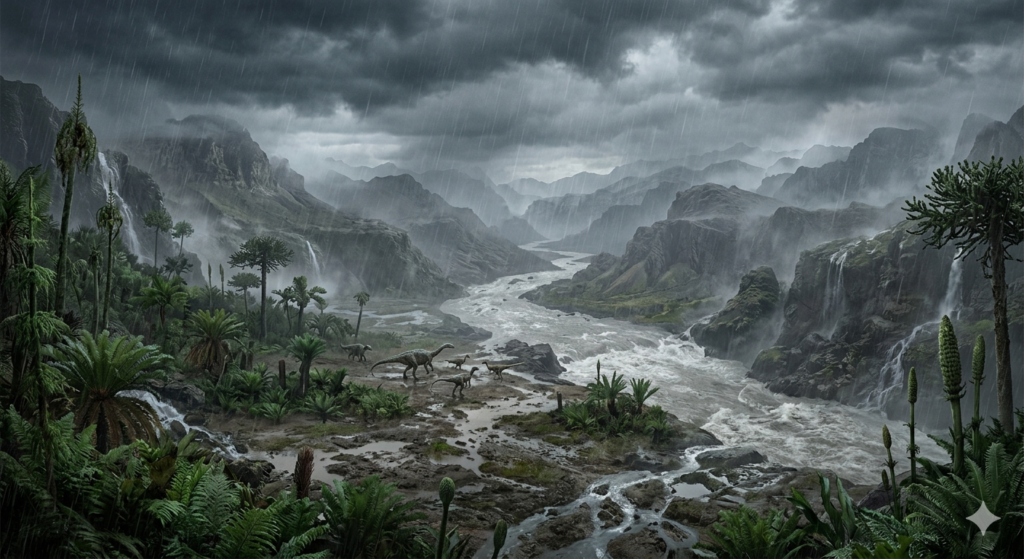
The Carnian Pluvial Episode was a period of unusually heavy rainfall across much of the planet. Geological evidence suggests that dry landscapes were transformed into wetter environments with expanded rivers, lakes, and floodplains.
Sedimentary rock layers from this time contain clear signs of increased rainfall, including river deposits, clay-rich soils, and sediments formed from intense erosion. These deposits have been discovered in many parts of the world, indicating that the wet climate was a global phenomenon rather than a regional event.
Scientists estimate that this unusually wet phase lasted for about two million years, making it one of the longest periods of sustained rainfall in Earth’s history.
What Caused This Mega Rainfall?
The most widely accepted explanation involves massive volcanic eruptions associated with the Wrangellia Large Igneous Province, a huge volcanic region that once existed near the western margin of North America.
These eruptions released enormous amounts of greenhouse gases such as carbon dioxide into the atmosphere. The increase in greenhouse gases caused global temperatures to rise, which intensified the planet’s water cycle. A warmer atmosphere can hold more moisture, leading to increased cloud formation and heavier rainfall.
As a result, many previously dry areas began experiencing frequent storms and long-lasting wet conditions.
Impact on Life on Earth
The Carnian Pluvial Episode had significant effects on ecosystems. The wetter climate allowed forests and vegetation to expand into regions that were previously dry. This created new habitats for animals and helped many species evolve and diversify.
One of the most important consequences was the expansion of early dinosaurs. Before this event, dinosaurs were relatively rare compared to other reptiles. However, after the climate shift and ecological changes, dinosaurs began to spread rapidly and eventually became dominant during the Jurassic Period.